Nobody enjoys guessing the circumference of someone’s bump with a length of string. Nobody has ever wanted to identify melted chocolate bars in nappies. And yet these things persist, because when you’re organising a baby shower and you reach the section of the afternoon labelled “activities”, the games are what the internet hands you.
You don’t have to do any of it. The games exist to solve a real problem — a room of people who don’t all know each other, several hours to fill, and a guest of honour who can’t do very much — but they’re not the only solution, and they’re rarely the best one.
Here’s how to plan an afternoon that works without them.
Understand what the games were actually for

Three jobs, really. They break the ice between guests who’ve arrived from different parts of the parent-to-be’s life. They give the afternoon a shape, so it isn’t three unstructured hours. And they take the attention off the guest of honour occasionally, which matters more than people realise — being looked at for four solid hours while heavily pregnant is exhausting.
Any replacement needs to do those three things. Simply removing the games and hoping conversation happens is how you get a room where the same four people talk and everyone else checks their phone.
Give the afternoon a shape instead
The most reliable structure is a sequence of things happening at roughly known times, rather than a single long block.
Arrival and drinks, food, one central activity, gifts if there are any, then a relaxed tail end where people drift. That’s it. Guests can see where they are in the afternoon, and there’s a natural point for anyone who needs to leave early to do so without it being awkward.
Two hours to two and a half is usually right. Longer than three and the guest of honour is flagging, whatever anyone says about how fine she is.
Better things to do than games
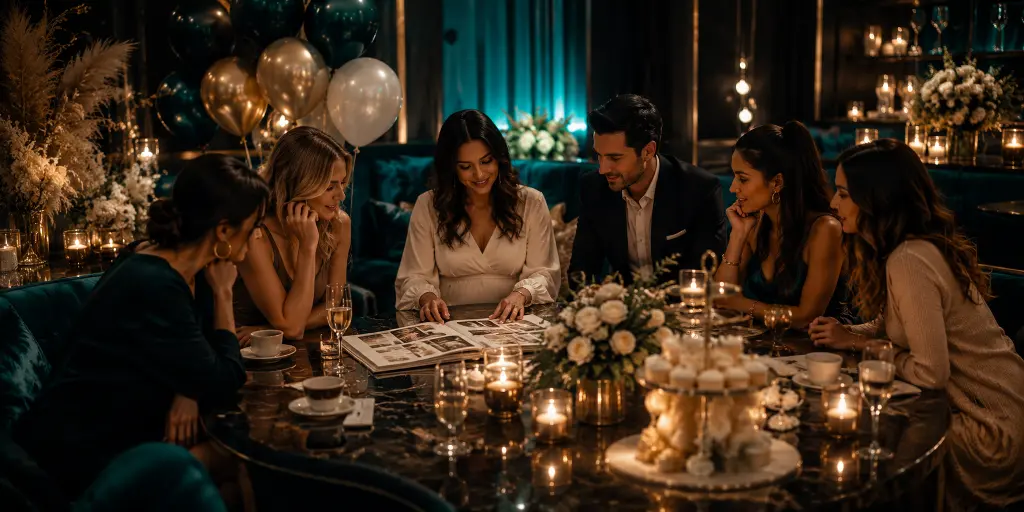
Something collaborative. A book instead of a card — everyone brings a children’s book with a message written inside, and the baby ends up with a library. Or a memory book where guests write advice, a wish, or something they remember about the parent-to-be. This gives arriving guests an immediate task, which solves the awkward first twenty minutes, and produces something that’s actually kept.
Something made. Decorating plain baby grows or bibs with fabric pens, painting a small canvas for the nursery, making a bunting where each guest does a flag. Craft activities are the closest replacement for games because they occupy hands and lower the stakes of conversation. People talk far more easily when they’re doing something.
Something brought in. A florist doing a short demonstration, someone teaching a simple skill, a photographer taking proper portraits of the guest of honour with different groups of guests. This costs money, but it removes the entire problem of what to do, and the photographs in particular tend to be valued more than anything else from the day.
Something practical. A nappy-changing race sounds like a game, but a genuine session where an experienced parent or a midwife answers questions is not. First-time parents often have things they’d like to ask and no obvious forum. It has to be pitched right — invited, not imposed — but it can be the most useful hour of the whole afternoon.
Or nothing structured at all, if the guest list is small and everyone already knows each other. Six people who are close don’t need an activity. Thirty people from four different social circles do.
Food does more work than any activity
If you cut everything else, keep this. Food is what gives an afternoon its rhythm and gives people a legitimate reason to move around the room and talk to someone new.
Afternoon tea format works particularly well, because it’s grazing rather than a sit-down meal — people can get up, circulate and return. A buffet does the same job. A formal seated meal locks everyone next to whoever they arrived with, which is exactly what you’re trying to avoid.
Ask for dietary requirements from everyone in advance, and remember the guest of honour’s own restrictions, which people forget with striking regularity at an event held in her honour.
On drinks: this is a daytime event and there’s no need for it to be alcohol-centred. Good soft drinks make more difference than anyone expects — proper lemonade, iced tea, decent coffee, a couple of well-made non-alcoholic cocktails. If some guests want something else, a small bar arrangement is easy enough to organise with a exclusive venue hire in Luton, but it shouldn’t be the point of the afternoon.
Think about who’s in the room
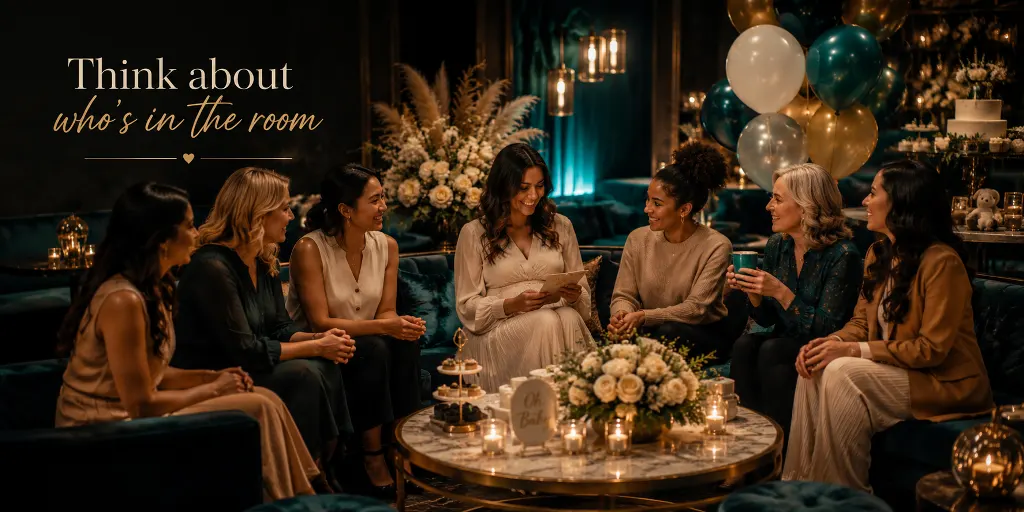
A baby shower is a happier event for some guests than others. Among any group of women invited to celebrate a pregnancy, there will usually be someone who has experienced loss, someone struggling to conceive, and someone for whom the subject is complicated in ways they haven’t shared.
This isn’t a reason not to have the party. It’s a reason to give the afternoon some breathing room: somewhere quieter to sit away from the main group, a shape that makes it easy to step out for ten minutes, and a finish time that’s actually observed. Compulsory participation in an hour of pregnancy-themed games is precisely the thing that leaves people trapped.
The same consideration applies to guests who’ve travelled, guests with small children in tow, and older relatives who won’t want three hours standing up.
Where to hold it
At home is the default, and it’s fine for smaller numbers. Beyond about fifteen people it becomes hard work, and the person hosting spends the afternoon in the kitchen rather than at the party.
A hired space solves that, and for a baby shower you’re looking for slightly different things than for an evening event:
- Daytime availability, which not every venue offers — ask specifically
- Somewhere comfortable to sit, with proper seating rather than bar stools
- Accessibility, including step-free access and the state of the toilets, which matters for a heavily pregnant guest of honour
- A quieter corner away from the main group
- Whether you can bring your own decorations, and what time you can get in to put them up
- Catering — whether it’s in-house, or whether you can bring your own or use an external caterer
- Parking or transport, since guests may be travelling with small children
Ask about all of it at the viewing rather than assuming. A venue that does a lot of evening events may still have a good daytime offer, but the arrangements will be different and you want them in writing.
Frequently asked questions
How long should a baby shower be?
Two to two and a half hours is comfortable. The guest of honour will be more tired than she admits, and a defined finish time is a kindness to everyone.
When should it be held?
Usually somewhere in the last couple of months before the due date — late enough to feel imminent, early enough that travel and standing around aren’t a struggle. Ask the parent-to-be rather than deciding for her.
Do we have to do gifts?
No, and plenty of people would rather not. A book instead of a card, a contribution to something larger, or nothing at all are all reasonable. Say clearly on the invitation which it is, so nobody arrives empty-handed and embarrassed.
Can we hold a baby shower at an evening venue?
Often yes — many venues hire out during the day, and a daytime booking can be more flexible and better value than an evening one. Ask about daytime availability specifically.
What if the guest of honour doesn’t want a fuss?
Ask her, and believe the answer. A small lunch with six people is a legitimate baby shower. So is a walk and a coffee.
The short version: give the afternoon a shape, put good food at the centre of it, choose one activity that gives people something to do with their hands, and leave room for guests who need a quieter moment. No string required.
If you’re looking for somewhere in Bedfordshire, After Dark is a baby shower venue in Luton in the town centre, close to the station, and the team can talk through daytime availability and arrange a viewing.